Sep 21, 2026
124 km on Foot, 21 Hours of Running: What Our Journey from Cergy to Rouen Taught Us About Autism and Endurance
Three of us, one bicycle, and twenty-one hours between Cergy and Rouen for children whose marathon has no finish line.
Three title options, pick one before you publish:
124 km on Foot, 21 Hours of Running: What Our Journey from Cergy to Rouen Taught Us About Autism and Endurance
From a 5:00 AM Start to a 2:00 AM Finish: Running 124 Kilometers for Autism Awareness
Cergy to Rouen (124 km): 3 Men, 1 Bike, 21 Hours for Autistic Children
The air at Cergy Prefecture at 4:30 in the morning has a taste. Cold, metallic, a little damp. It gets into your lungs before you have decided to breathe deeply.
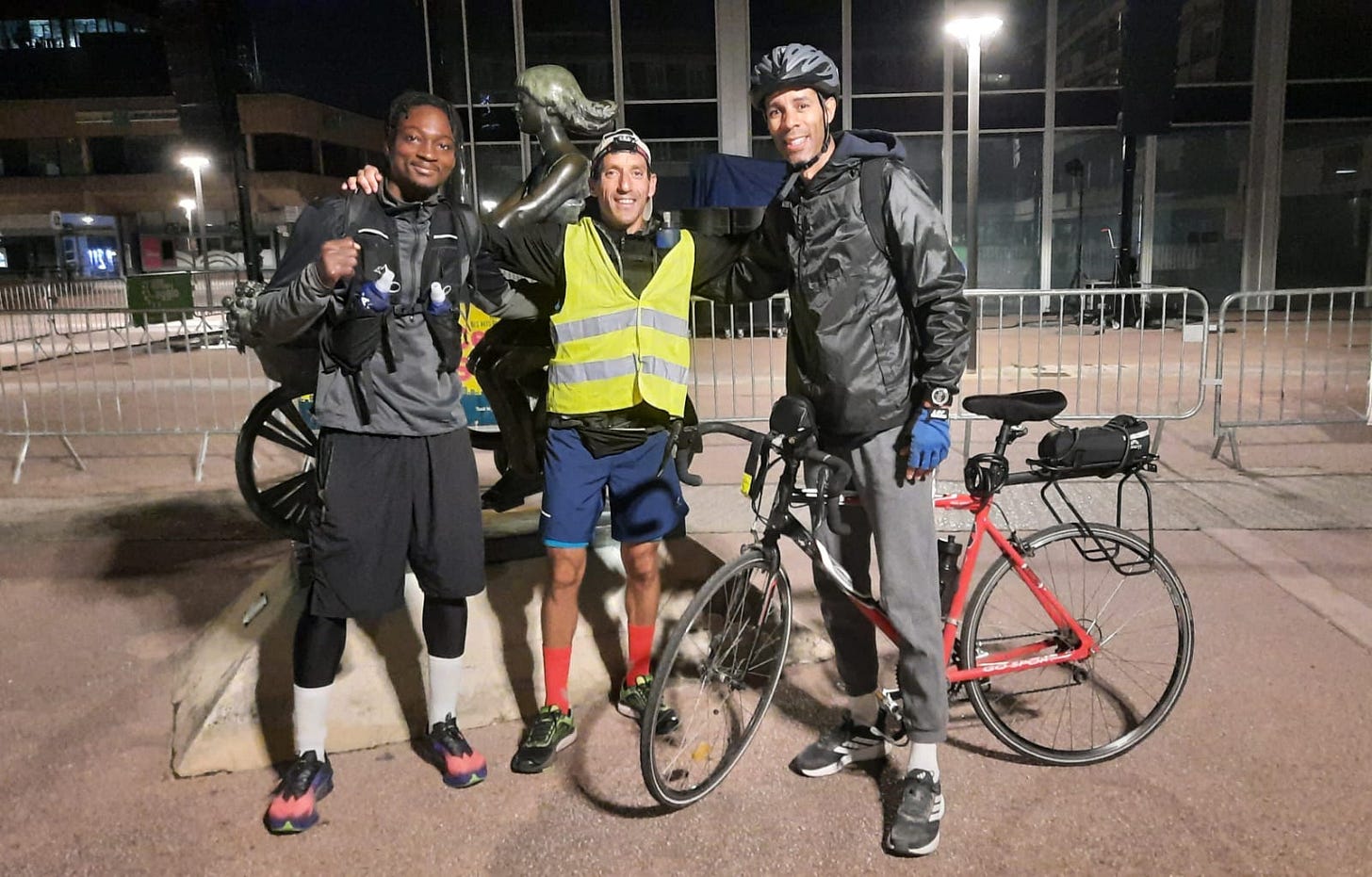
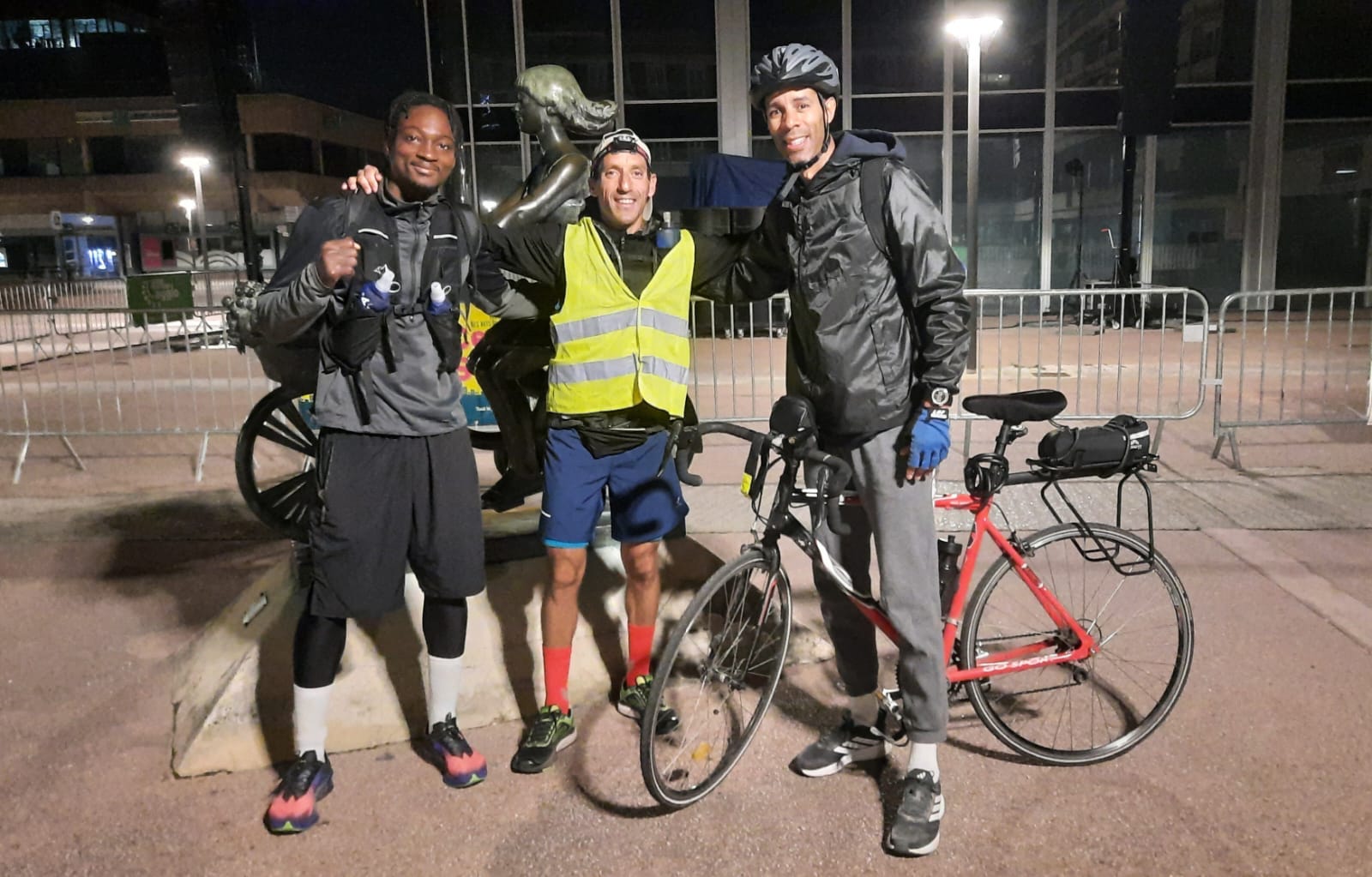
It was pitch black. The square was empty. No spectators, no starting gun, no race number pinned to anyone's chest. Just three men, one bicycle, a few bottles of water, and a distance that nobody in their right mind runs in a single push: 124 kilometers, all the way to Rouen.
We were quiet. Not the confident quiet of athletes who know exactly what is coming. The other kind. The kind where everyone is doing the math in their head and nobody wants to say the number out loud.
There were three of us:
Rachi, the runner. This was his challenge, his idea, his legs on the line.
Me, the challenger. My job was simple and slightly cruel: run next to him and keep pushing him past the point where he would have stopped alone.
Our support rider, on the bike. Water, food, dry socks, photos, videos, and the small miracle of someone always being ten meters ahead, checking that the road was safe.
And one reason.
We did not run 124 kilometers for a medal, a personal best, or bragging rights. There is no medal. We ran to put a spotlight on autistic children and their families, who fight quiet, daily, invisible battles that nobody applauds and nobody posts about.
At 5:00 AM, we started running into the dark.
Act I: Dawn and the first miles (0 to 55 km)
The first hour is a strange kind of lie. Your legs feel fresh. Your breathing settles. Your headlamp carves a small moving circle out of the night, and you start to believe this will be easy.
It will not be easy. But the lie is useful, so you let it carry you.
At 6:00 AM, a friend was waiting for us on the side of the road with supplies. Nothing dramatic: water, something to eat, a few words. But when you have been running in the dark for an hour and a familiar face appears out of nowhere, it lands like a full night of sleep. We refilled. We laughed. We left.
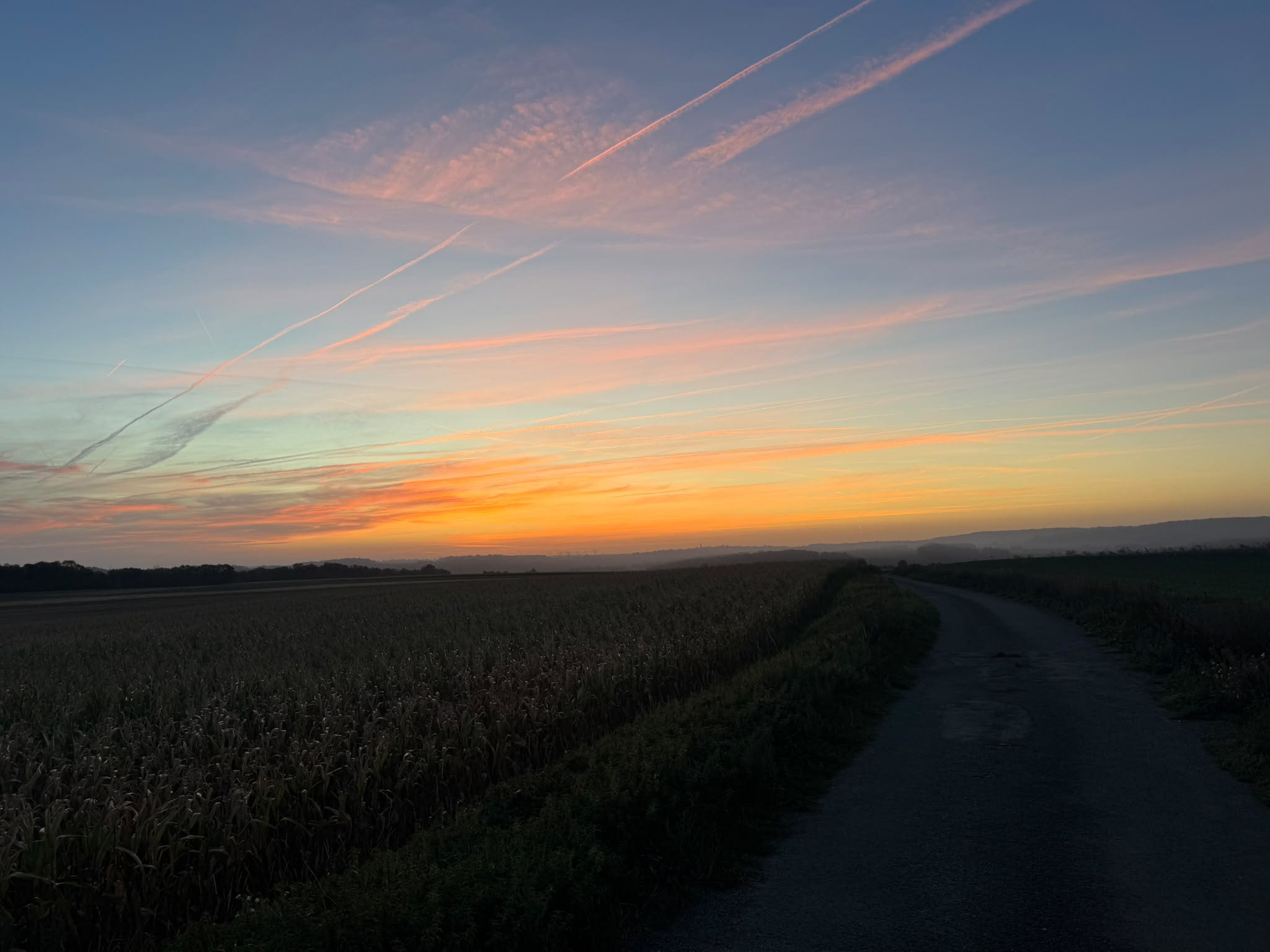
Around 6:30, the sky started to let go. The black turned deep blue, then grey, then a thin orange line opened over the fields. We were running on empty country roads between crops still wet with dew, and the light arrived slowly, the way it does when nobody is watching.
Our rider dropped back, framed a shot, rode ahead, framed another. Those first photos and videos are the ones where we still look human.
A rhythm settled in, and it held for hours:
Two runners side by side, matching cadence without talking about it.
One bicycle a few meters ahead, reading the road, spotting the cars, calling out the potholes.
Nobody speaking much. Just the sound of three sets of wheels and feet, and the occasional bird deciding the day had started.
That is what the first 55 kilometers looked like. Long, patient, almost peaceful. The kind of running where the effort hides behind the scenery.
Act II: Kilometer 55, and the power of a community
We reached the Vetheuil and Vernon area after more than five hours of continuous running.
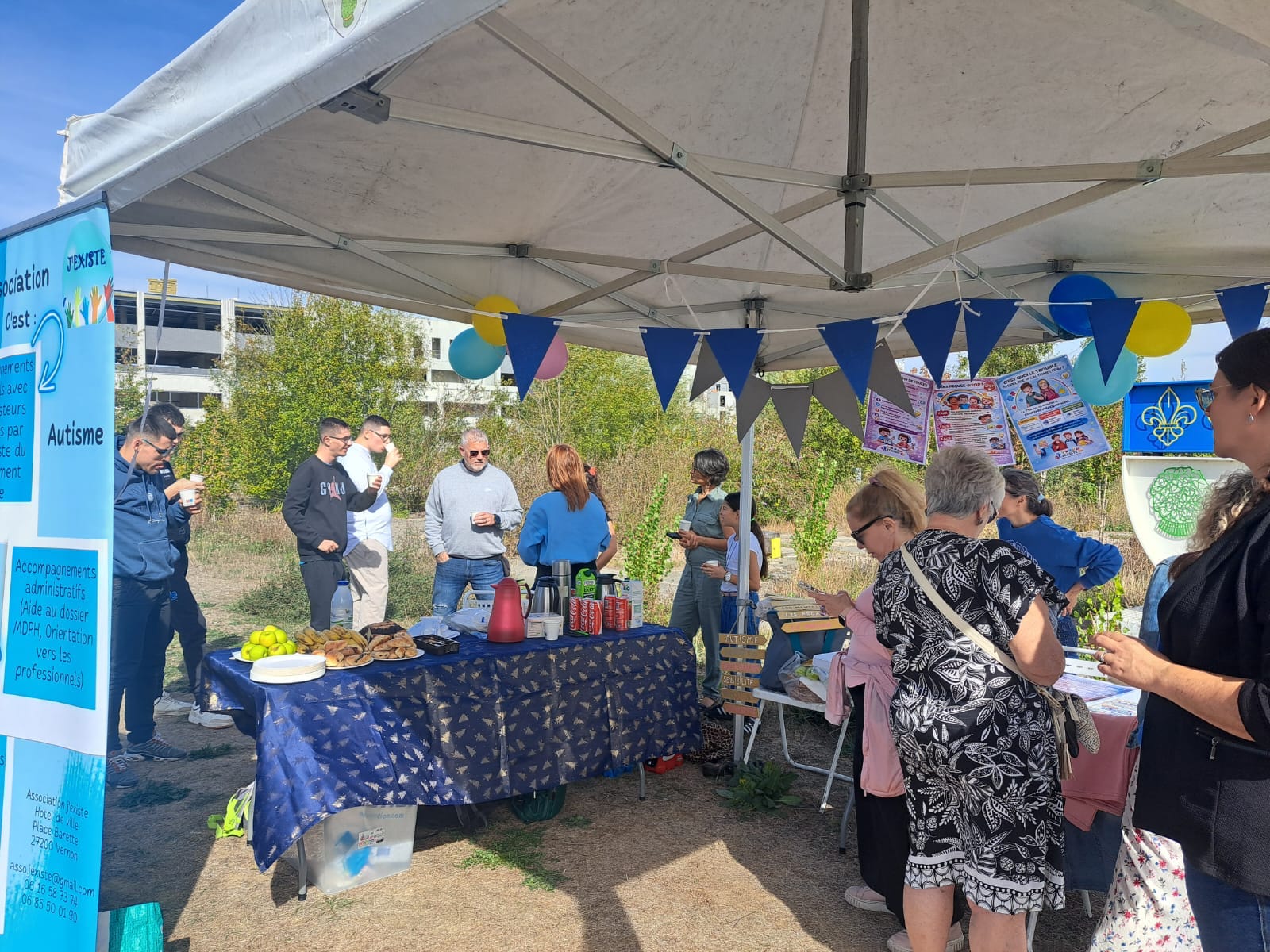
We were tired but intact. And then we turned a corner and found people waiting for us.
Members of the local autism association were there. The town mayor was there. They had come out to meet three sweaty strangers who had been running since before sunrise, and they treated us like the effort mattered.
I want to be honest about what that does to you physically. It is not a metaphor. Your shoulders drop. Your face changes. The pain does not disappear, but it stops being the main thing in your head.
We stopped for twenty minutes. We ate, we drank, we sat down for the first time in five hours, which is its own small trap.
And we recorded a video message for social media, right there, on the spot. Not polished. Not scripted. Just the three of us, out of breath, saying why we were running: for autistic children, for their parents, for the families who do this every single day without a support bike and without anyone waiting at kilometer 55.
Then something better happened. Two other runners joined us. They ran 23 kilometers at our side.
There is a thing that happens when strangers start sharing your effort. The suffering does not go away, it just stops belonging to you alone. Conversation replaces counting. Kilometers pass without being noticed. For 23 kilometers, it stopped feeling like an endurance test and started feeling like a group of people going somewhere together.
That is exactly what the cause is about, by the way. Nobody should have to carry it alone.
Act III: The night, the wall, and the funfair
Then the day turned, and so did the run.
Somewhere between kilometer 80 and 90, we passed the sign for Val-de-Reuil. I remember the sign better than I remember the kilometers around it, which tells you everything about that stretch.
By then the legs were heavy in a way that food and water do not fix. Every small hill felt personal. The conversation died. Running became a negotiation, renewed every few minutes: one more kilometer, then we decide.
You never decide. You just run one more kilometer and open the same negotiation again.
Around kilometer 100, late at night, we came across a funfair. Lights, music, fried food, the whole thing, still running long after we thought the world had gone to bed.
We stopped to eat and to find something resembling strength.
And that is where the strangest, warmest moment of the whole day happened.
We met the travelers and the carnival workers who run the fair. Older men, a few drinks in, absolutely not the crowd you would cast for an ultra-marathon cheering section. We told them what we were doing. Cergy. Rouen. On foot. Since five in the morning. For autistic children.
They went wild.
They cheered us like we had just won something. They asked questions, they shook our hands, they wanted the details, they wanted to know how much was left. They insisted on a group photo, all of us squeezed together under the fairground lights, three exhausted runners and a crew of men who had been working since morning themselves.
No one in that photo had anything in common except the moment.
That is the thing about running for a cause: it builds bridges you never planned to build. You leave with your legs destroyed and your faith in people quietly repaired.
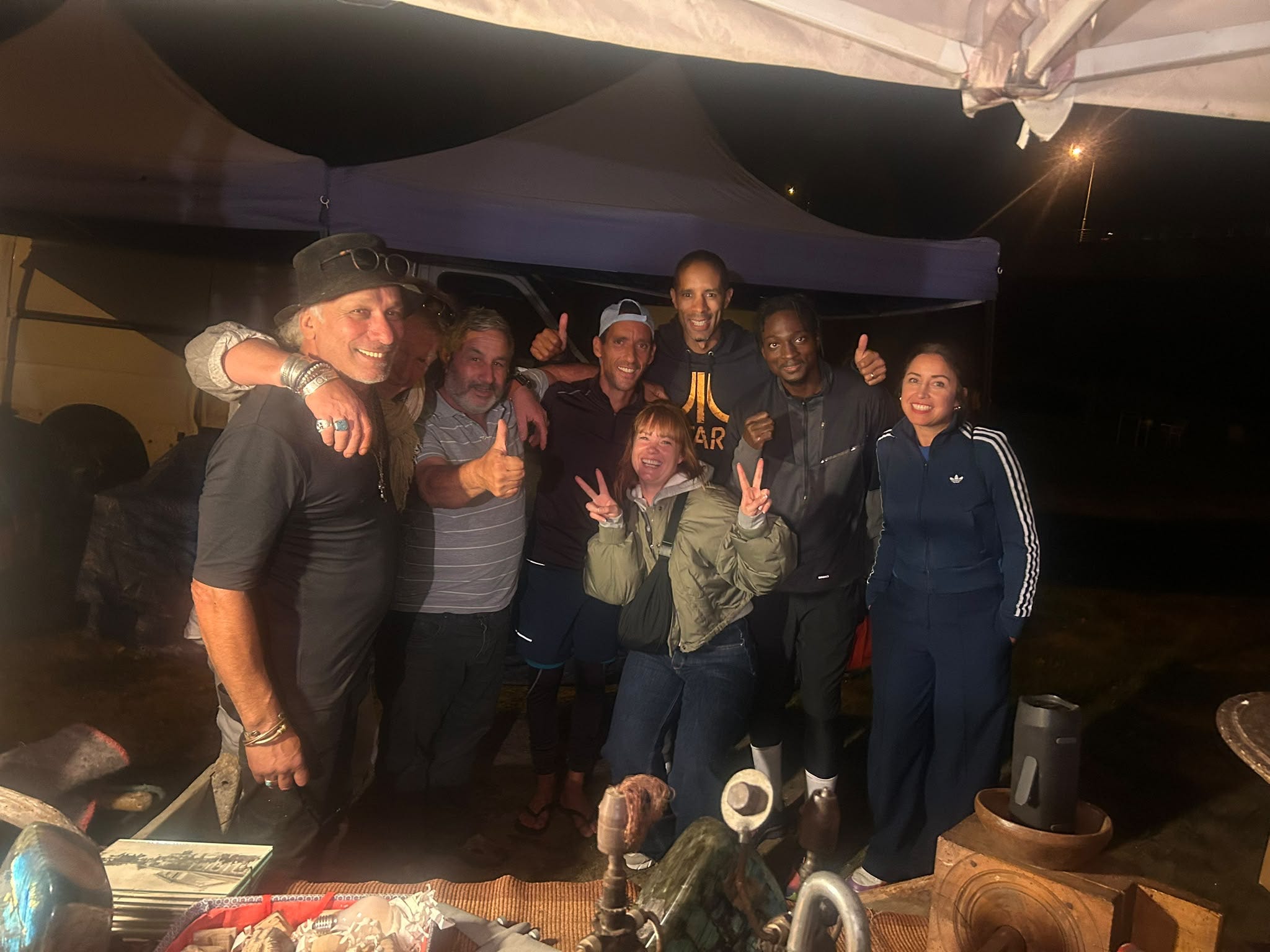
Act IV: Rouen, 2:00 AM
The last 14 kilometers were the longest of my life.
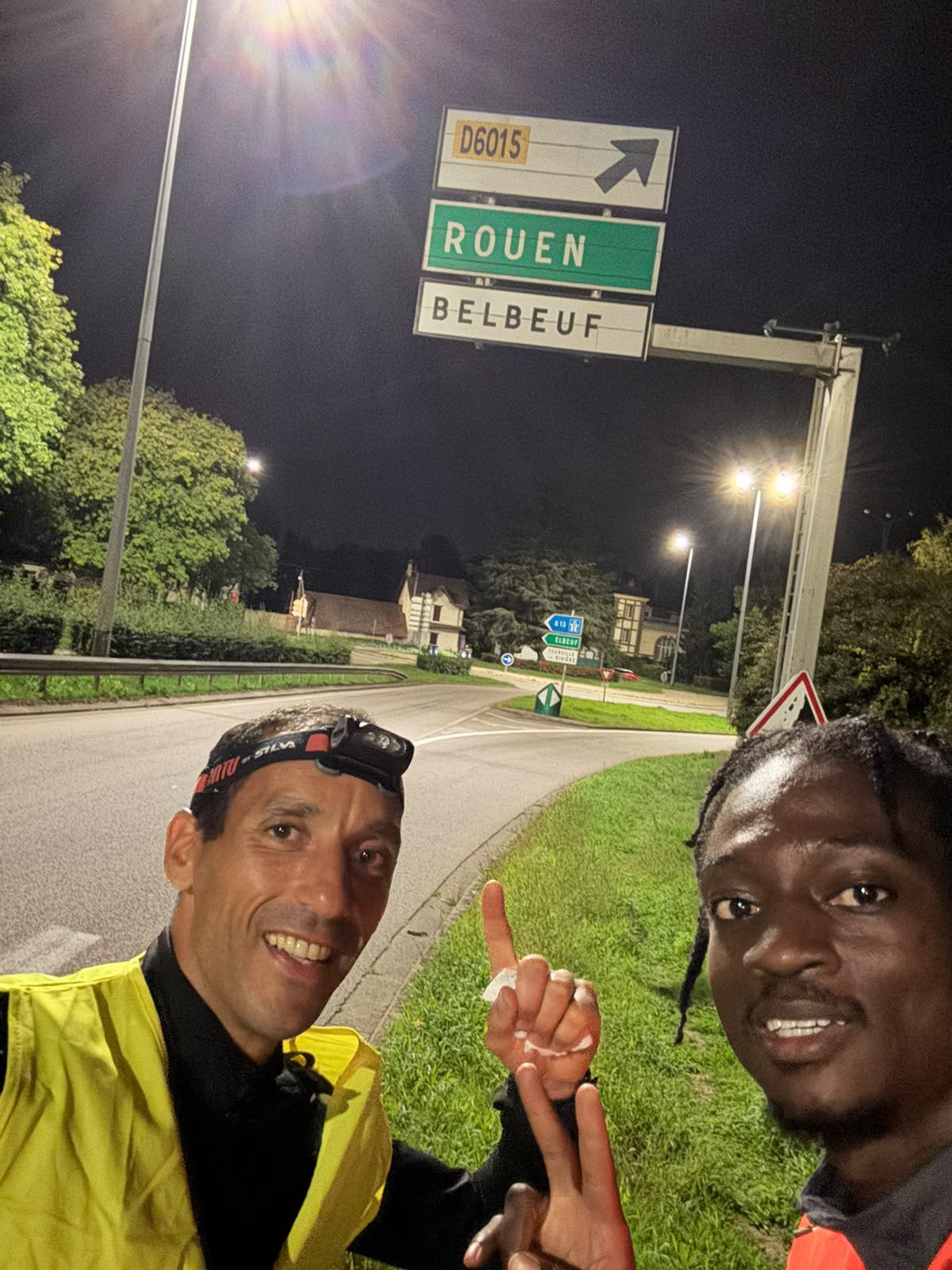
Entering Rouen at night is a silent thing. Empty streets, closed shutters, traffic lights changing color for nobody. Our footsteps echoed off the buildings. The bike rolled beside us without a word.
At that point the body is no longer the problem. The body has already said everything it had to say and been overruled. What is left is the mind, running its own loop: you can stop, nobody would blame you, you have already done enough.
You keep going anyway. Because stopping at kilometer 118 would not have been a failure of the legs. It would have been a failure of the reason.
We finished in Rouen at 2:00 in the morning. Twenty-one hours after leaving Cergy.
124 kilometers. Battered feet. Legs that no longer took instructions. Three people standing in an empty street at two in the morning, unable to explain what they were feeling to anyone who was not there.
And here is the part I keep coming back to.
Twenty-one hours is nothing.
It hurt, it was long, it was hard, and it is still nothing compared to what autistic children and their parents live every single day. Their run has no finish line at 2:00 AM. There is no support bike, no friend waiting at kilometer 55, no mayor at the roadside, no funfair applause. There is a lifetime of small battles, repeated daily, most of them invisible.
We got to choose our suffering, and we got to stop. They do not.
If these 124 kilometers made even one person look differently at an autistic child, ask a better question, judge a parent a little less quickly, or simply understand that the family next door is running an ultra of their own, then every single meter was worth it.
What you can do in ten seconds
We ran for visibility. Visibility only works if it travels.
Please share this post. Restack it. Send it to one person. That single click costs you nothing and takes the cause further than our legs ever could. We covered 124 kilometers; a share covers more ground than that in a second.
And if you know a family living with autism, do the simplest thing: tell them you see them.
Thank you
To the autism association at kilometer 55, for coming out to meet us and for the work you do the other 364 days of the year.
To the mayor and the town, for standing at the roadside when you had no obligation to.
To the two runners who joined us for 23 kilometers and carried more than they realize.
To the friend at kilometer 20 with the water and the good timing.
To the travelers and carnival workers at kilometer 100, for the loudest and most unexpected encouragement of the entire day.
To our support rider, who spent 21 hours on a bicycle so that two runners would never have to think about anything but the next step. There is no version of this story where you are not in it.
And to Rachi, who decided this was possible before anyone else did.
124 kilometers. 21 hours. Three of us on the road, and one reason worth all of it.
Get the next experiment in your inbox: the blog is also a Substack newsletter you can subscribe to.
Subscribe free