Aug 2, 2026
The Fastest Way I Found to Get My First 25 Substack Subscribers
I’m now at 41 subscribers in under a week. Reciprocal-support Notes solved the cold start—but they won’t build the audience I want.
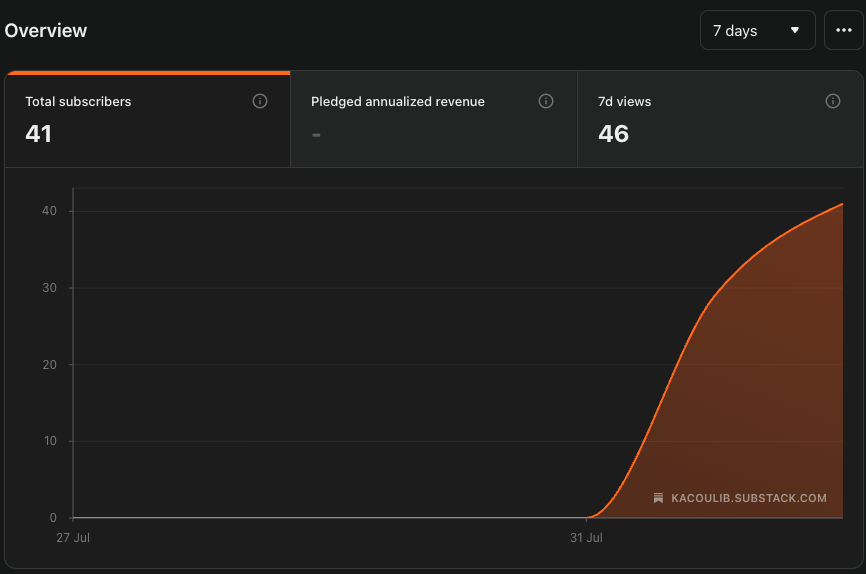
Less than a week ago, this publication had 0 subscribers.
Today, it has 41.
The fastest part was crossing the first 25.
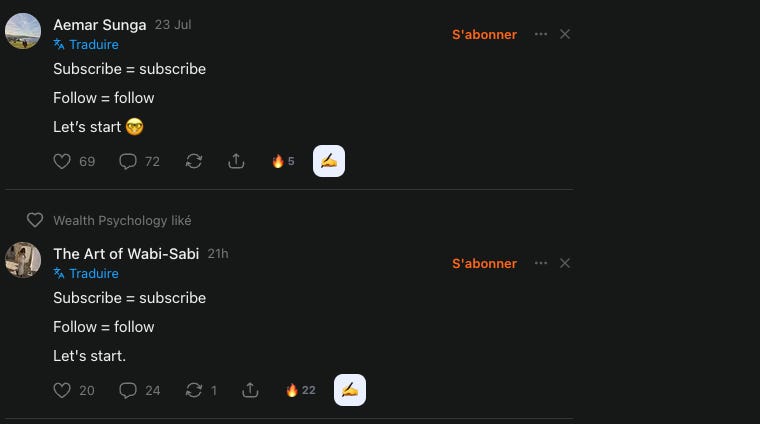
I did it by joining “Subscribe = Subscribe” Notes: threads where small creators openly agree to support each other.
It worked.
But only for the problem it actually solves: getting out of zero.
The baseline
Start: 0 subscribers
Now: 41 subscribers
Period: less than one week
7-day views: 46
Initial objective: create enough momentum to stop publishing into an empty profile
What I tested
I used a simple process:
• Find active “Subscribe = Subscribe” Notes
• Open profiles instead of subscribing blindly
• Prioritize creators whose topics overlap with mine
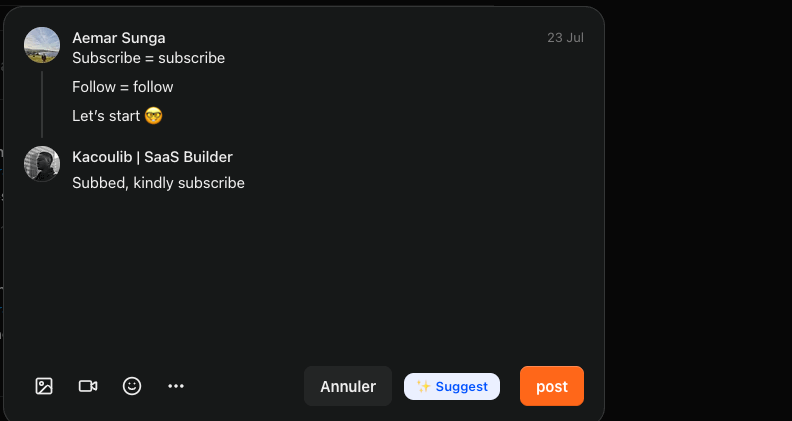
• Leave a real reply when I have something useful to add
What actually worked
These Notes remove the hardest part of starting from zero: discovery.
The intent is explicit. New creators are actively looking for other publications to read and support.
That helped my account cross the first 25 subscribers.
The total then climbed to 41 while I was drafting this article.
Reciprocal support created early momentum quickly.
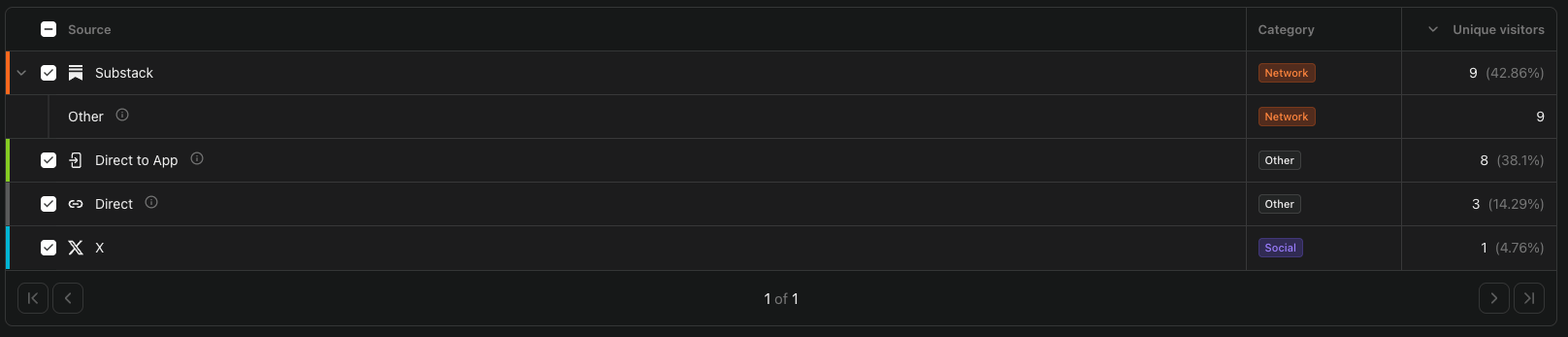
I cannot claim that every one of those 41 subscribers came from this tactic.
Substack shows that subscribers came through its network, but it does not identify the exact Note, reply or interaction behind every subscription.
Where the tactic breaks
A reciprocal subscriber is not automatically a reader.
This tactic optimizes for the subscription action. It does not guarantee that someone will open the next article, reply to a Note or become a customer.
Used for too long, the subscriber count can keep rising while the real audience stays flat.
That is why I see 25 as a useful stopping point—not a strategy for reaching 1,000.
The first 25 solve the cold-start problem. They do not prove that you have built an audience.
What I’m changing next
Now that the account has reached 41 subscribers, the strategy has to change.
My next steps are:
• Publish useful Notes around Substack growth and acquisition
• Reply to creators inside my actual niche
• Publish one practical newsletter article each week
• Track opens, replies, returning readers and subscriber sources
• Use reciprocal-support threads only selectively
The first 25 made the profile feel less empty.
The next 59 need a reason to stay.
That reason starts with what your profile shows a first-time visitor, so I later built a free Substack profile audit that scores it out of 100.
Conclusion
Use “Subscribe = Subscribe” Notes to leave zero.
Do not use them to build your entire publication.
Early momentum is useful. A qualified audience is more valuable.
When this account reaches 100 subscribers, I’ll publish the complete breakdown: what generated growth, what failed and whether this process looks repeatable.
Subscribe to follow the experiment.
Get the next experiment in your inbox — the blog is also a Substack newsletter you can subscribe to.
Subscribe free