Aug 5, 2026
How I Grew From 25 to 67 Substack Subscribers in Four Days
Reciprocal-support Notes helped create momentum, while original Notes gave people a reason to understand my work.
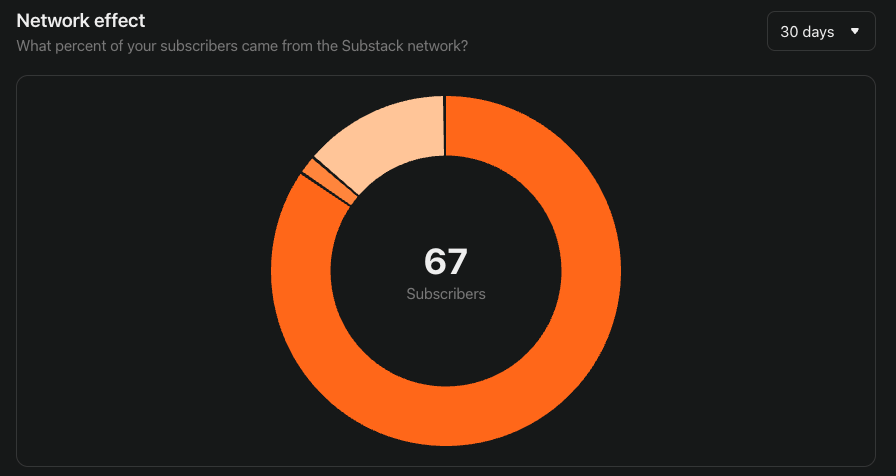
I grew from 25 to 67 newsletter subscribers in four days.
Most subscriptions were attributed to the Substack App, but the experiment also exposed the difference between gaining subscribers and building actual readers.
Here is what I tested, what appeared to work, and what I still cannot prove.
I’m documenting real Substack growth experiments, numbers and lessons. Subscribe to see which Notes actually create returning readers.
The baseline
Start: 25 newsletter subscribers
Now: 67 newsletter subscribers
Net growth: 42 subscribers (+168%)
Period: August 1–5, 2026
Main objective: Understand how reciprocal-support Notes and original Notes contributed to early subscriber growth.
What I tested
Participated in reciprocal-support Notes such as “subscribe-for-subscribe” and creator-discovery threads.
Published my own original Notes about Substack growth, experiments, observations and lessons.
Shared practical tactics, answered comments and referenced relevant articles when they matched the conversation.
What appeared to work
Reciprocal-support Notes appeared to create the initial momentum by placing my profile in front of creators who were actively looking to connect.
Putting your profile in front of people only pays off if the profile converts them. I built a free Substack profile audit that scores yours out of 100.
Publishing my own Notes served a different purpose: it showed visitors what I actually write about and gave them a reason to subscribe beyond reciprocity.
Both tactics were used during the same period, so I cannot accurately separate their individual contribution.
What remains uncertain
I cannot determine which specific Notes, replies or interactions produced each new subscriber.
I also cannot conclude that every reciprocal subscriber became an active reader.
The subscriber count grew, but I still need to measure article views, replies, retention and returning readers.
The dashboard attributes most subscriptions to the Substack App, but it does not identify which specific Note, reply or interaction generated each signup.
What I’m changing next
Publish different types of original Notes and track which topics generate the most engagement.
Track article views, replies, profile visits and returning readers—not only subscriber count.
Run the next experiment for 30 days.
Conclusion
Reciprocal-support Notes helped me gain visibility quickly.
Publishing original Notes gave that visibility context and showed people what they could expect from my publication.
The next question is whether these new subscribers become active, returning readers.
Related reading
I previously explored why reciprocal subscriptions can create early momentum without necessarily building a lasting readership:
I’m testing which Substack growth tactics create active readers—not only larger subscriber counts.
Subscribe to follow the next 30-day experiment and see which Notes generate article views, replies and returning readers.
Get the next experiment in your inbox — the blog is also a Substack newsletter you can subscribe to.
Subscribe free